Is The National Football Museum Free? Who Gets In Free And Who Pays
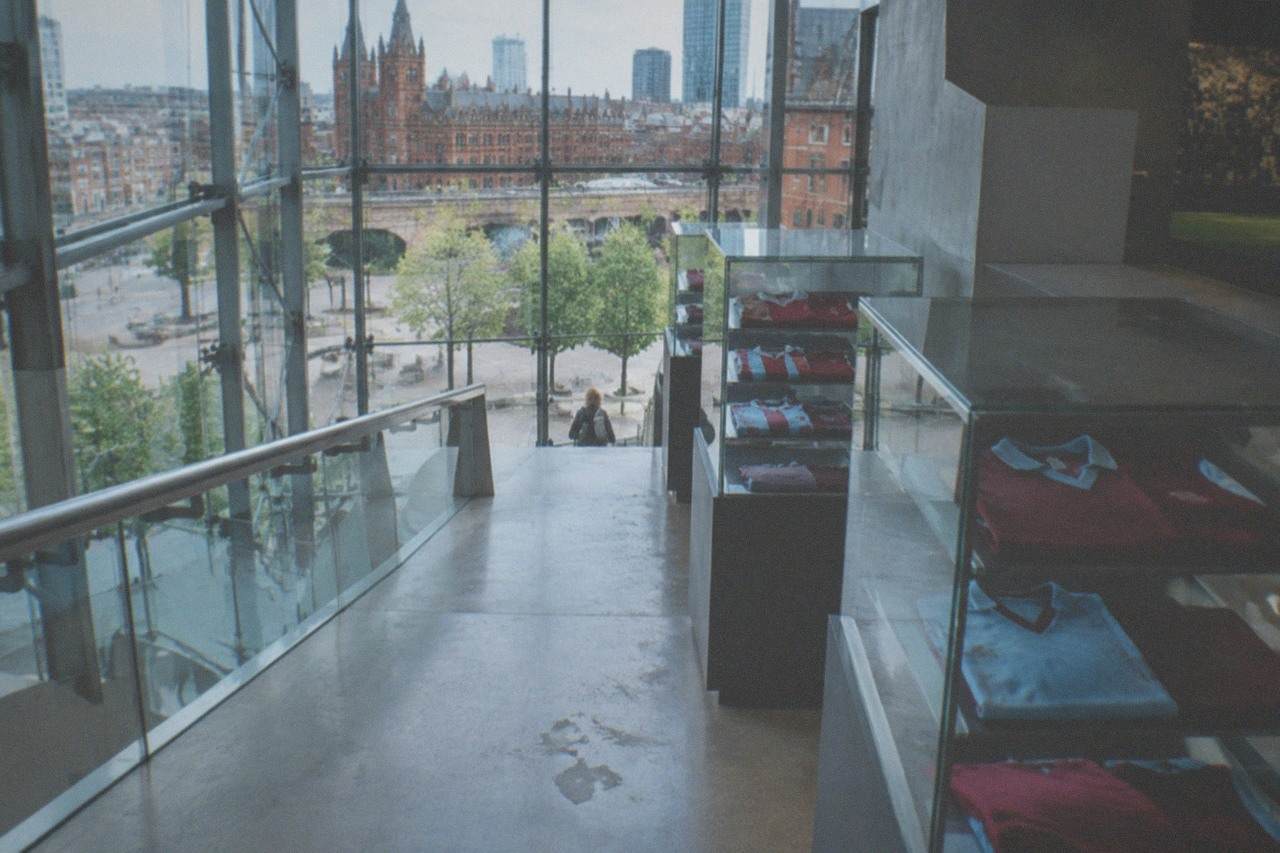
The National Football Museum sits in the glass Urbis building in the heart of Manchester, and its admission policy splits visitors into two very different groups: locals who walk in free and everyone else who pays.
Short answer
The National Football Museum is free only for Manchester City Council residents with M postcodes who show ID or proof of address; everyone else, including all tourists, pays for admission.
The National Football Museum sits in the glass Urbis building in the heart of Manchester, and its admission policy splits visitors into two very different groups: locals who walk in free and everyone else who pays.
The National Football Museum is free only for Manchester City Council residents with M postcodes who show photo ID or proof of address at the entrance. Everyone else, including every tourist and day visitor, pays for admission: adults 16 and over pay £15 online or £17 at the door, with child, concession and family tickets priced separately. Calling the museum simply "free" without that condition is misleading, and this page exists to give the honest full picture.
Who Actually Gets Into The National Football Museum Free?
Free admission applies to one group and one group only: people who live within Manchester City Council's boundaries, meaning an M postcode, and who can prove it at the door. The museum's own visit page states this residency rule directly, and it is the single most misunderstood part of the museum's pricing.
For a Manchester resident, the visit is a genuinely free day out. Show a utility bill, a council tax statement, a driving licence or similar proof of the M address, and entry costs nothing. The rule is generous in one sense: it covers the whole permanent collection, all the galleries, and the standard interactive zones.
| Visitor group | Entry cost | What is needed |
|---|---|---|
| Manchester City Council resident (M postcode) | Free | Photo ID or proof of address shown at the door |
| Adult 16+ (everyone else) | £15 online, £17 walk-up | Paid ticket |
| Child 5 to 15 | £9 online, £11 walk-up | Paid ticket |
| Under 5s | Free | Accompanying paying adult |
| Concessions | £13 | Eligibility proof |
| Family saver (2 adults, 2 children) | £39 | Paid ticket |
The distinction matters because the museum is marketed, in many listings and roundups, as one of Manchester's free attractions. That is true for roughly half the people walking through Cathedral Gardens on any given day, the ones who actually live in the city, and false for the tourists who make up most of the queue in school holidays. Anyone planning a free day out in Manchester on a budget needs to know which side of that line they fall on before they arrive.
For visitors who do not qualify, the good news is that Manchester has a dense cluster of genuinely free museums within a short walk of the museum's front door, and this page covers those alternatives in detail further down. The city also has a set of free, pay what you want walking tours run by independent local guides on GuruWalk, which cost nothing to join and which cover the football heritage of the streets around the stadium sites.
What Does The National Football Museum Cost If You Are Not A Resident?
Non-residents pay full admission, and the pricing is tiered by age and by how the ticket is bought. Buying online is cheaper than turning up on the day: an adult ticket bought in advance costs £15, while the same ticket bought at the door costs £17. That two pound gap is worth knowing for families especially, because the family saver ticket, covering two adults and two children, is £39, and buying four walk-up tickets individually instead would cost considerably more.
Children aged 5 to 15 pay £9 online or £11 at the door, and under-5s enter free with a paying adult. Concessions, which typically cover students, seniors and visitors with disabilities, cost £13. These figures come from the museum's own visit page, and like any museum pricing they should be re-checked before a visit, because special exhibitions and temporary experiences are priced separately and can change the total cost of a day there.
| Ticket type | Online price | Walk-up price |
|---|---|---|
| Adult 16+ | £15 | £17 |
| Child 5 to 15 | £9 | £11 |
| Under 5 | Free | Free |
| Concession | £13 | £13 |
| Family saver (2 adults, 2 children) | £39 | £39 |
There is one more layer of cost that catches visitors out: some in-museum experiences are charged on top of admission for everyone, residents included. The Penalty Shootout and similar interactive add-ons carry their own small charges, so even a Manchester local having a free visit can end up spending a few pounds if they want the full interactive experience. The core galleries, though, are covered by whatever was paid, or not paid, at the entrance.
How Do You Prove You Qualify For Free Entry?
The proof the museum accepts is straightforward: something that ties the visitor to an M postcode address. A driving licence with the address on it, a recent utility bill, a bank statement, or a council tax document all work in principle. The museum's stated rule is free entry for Manchester City Council residents, so the document needs to show an address that is both within an M postcode and within the council's boundaries, which are not perfectly identical sets.
Visitors from the wider conurbation should be careful here. Stockport, Tameside, Trafford, Salford, Bury, Rochdale and Oldham residents all live in Greater Manchester, and many have M postcodes in the postal sense, but they pay council tax to different borough councils. The free-entry rule belongs to Manchester City Council residents specifically. A Salford resident with an M postcode on their letters may still be asked to pay, because Salford is a separate city with its own council. If in doubt, the safest assumption for anyone outside Manchester city itself is that they will be paying.
For residents, the practical advice is to bring the physical document. A phone photo of a bill usually suffices, but staff at the door need to see something, and arriving with nothing means being treated as a paying visitor. There is no means test, no income threshold and no membership requirement beyond the address itself: it is purely a residency perk, funded by the council relationship with the museum, and it exists to keep a major cultural asset accessible to the people who live beside it.
Is The National Football Museum Free For Tourists?
No, and this is the point most worth stating plainly. A tourist visiting Manchester for a weekend, a football match or a city break will pay full adult admission of £15 online or £17 on the door. The museum appears on many "free things to do in Manchester" lists online, and for a visitor following one of those lists, the surprise charge at the entrance is a real disappointment that this page is designed to prevent.
The confusion is understandable. The museum spent years genuinely free to all, funded differently, and older articles and guidebooks still describe it that way. The residency-only free entry is the current policy, stated on the museum's own visit page, and any article written before that change is simply out of date. For a tourist weighing up a Manchester itinerary, the honest framing is this: the National Football Museum is a paid attraction with a residents' free tier, not a free attraction with a tourists' charge.
That reframing changes how a visitor should budget a day. Fifteen pounds is not a trivial line item on a budget trip, and it buys a genuinely excellent museum, with the only permanent national collection of football memorabilia in the country, so it can be worth the money for a football-mad visitor. But a tourist whose priority is a free day out has better options within ten minutes' walk, and the sections below lay them out.
What Can You See Inside Once You Are In?
The museum's collection is the national collection of English football, and it is deep enough to fill several hours. The permanent galleries cover the history of the game from its Victorian codification through to the modern Premier League era, with the FA Cup, the evolution of kit design, and a hall of fame that inducts players, managers and pioneers of the women's game. Marquee items rotate, but the collection includes shirts worn in landmark matches, historic trophies, and the personal archives of figures central to the game's development.
The interactive layer is what makes the museum popular with families. Visitors can test their commentary skills in a press-box simulation, try their reflexes in goalkeeper drills, and, for a small extra charge, take the Penalty Shootout challenge. The museum also runs a rolling programme of temporary exhibitions, often tied to anniversaries or tournaments, and these are sometimes included in admission and sometimes ticketed separately, so checking the current programme before a visit is worthwhile.
| What is inside | Included in entry? |
|---|---|
| Permanent collection galleries | Yes, for all ticket holders and residents |
| Hall of Fame displays | Yes |
| Interactive zones (commentary, goalkeeper) | Yes |
| Penalty Shootout | No, small extra charge for everyone |
| Temporary exhibitions | Varies by exhibition, check before visiting |
For a resident, all of that core content is free, which makes the museum one of the best-value free days out in the city for locals. For a paying visitor, the calculation is whether football history justifies the ticket price against the other attractions in the city, several of which cost nothing at all. A football enthusiast travelling for a match at Old Trafford or the Etihad will likely feel the ticket is money well spent. A general visitor with a tight budget has strong alternatives.
Are The Stadium Tours Free Too?
A related question visitors often bundle together with the museum: are the stadium tours at Manchester United's Old Trafford and Manchester City's Etihad free? They are not. Both are paid tour products sold by the clubs themselves, and both are among the most popular paid attractions in the region. There is no free public access to the inside of either stadium beyond the paid tours and match-day tickets.
The Old Trafford stadium tour takes visitors through the players' tunnel, the dugouts, the museum documenting Manchester United's history, and areas of the ground normally closed to the public. The Etihad Stadium tour covers the home dressing room, the tunnel, the pitch side and the press facilities at Manchester City's ground. Both are professionally run and well reviewed, and both are entirely outside the scope of a free-things-to-do itinerary, which is exactly why this site lists them as paid rather than pretending otherwise.
What a free itinerary can include is the outside of both stadiums. Walking around Old Trafford's exterior, with its statues, memorial and the Munich clock, costs nothing, and the tram to the ground is part of the ordinary transport network. The Etihad sits beside the Etihad Campus, visible from public roads. A free, pay what you want walking tour of the city centre, run by independent guides on GuruWalk, will not enter either stadium, but several of Manchester's free tours do cover the football culture of the city streets, and the museums listed below pick up the sporting history at no cost.
Which Manchester Museums Are Genuinely Free Instead?
Here is the part that redeems a free day out in Manchester: the city has one of the strongest clusters of genuinely free museums anywhere in England, several within a ten-minute walk of the National Football Museum's front door. For a tourist who has just learned the football museum charges admission, the honest answer is that the free alternatives are not consolation prizes; two of them rank among the best museums in the north of England.
Manchester Art Gallery on Mosley Street is free to all, with no booking required, open Tuesday to Sunday from 10am to 5pm. Its collection spans six centuries of painting and includes strong Pre-Raphaelite and Victorian holdings, and it sits a few minutes' walk south of the football museum's site. There is no residency rule, no ticket, no queue for entry beyond busy exhibition days.
Manchester Museum, on the University of Manchester's campus a short walk further south, is also free to all, including its South Asia Gallery and its Vivarium, the live amphibian collection that is one of the museum's signature draws. The one condition worth knowing is that the museum's main temporary exhibition is free but requires booking an online ticket in advance, while everything else can be walked into.
Beyond those two, the free list is long. The People's History Museum, the national museum of democracy, is free with a voluntary suggested donation. The Science and Industry Museum, built on the world's first passenger railway station, has free general admission with a free timed ticket booked online in advance. The Whitworth, the university's art gallery in the park, is free with no booking. The John Rylands Library, a neo-Gothic reading room of cathedral proportions, is free to enter. IWM North at Salford Quays is free. Salford Museum and Art Gallery is free. The Lowry's art galleries, holding the world's largest public collection of L.S. Lowry's work, are free, with only its theatre performances ticketed.
| Museum or gallery | Free to all? | The condition, if any |
|---|---|---|
| Manchester Art Gallery | Yes | None, no booking needed, closed Mondays |
| Manchester Museum | Yes | Main temporary exhibition needs a free booked online ticket |
| People's History Museum | Yes | £10 suggested donation, voluntary |
| Science and Industry Museum | Yes | Free timed ticket booked online in advance |
| The Whitworth | Yes | None, no booking required |
| John Rylands Library | Yes | None, queuing possible at busy times |
| National Football Museum | Residents only | Non-residents pay £15 to £17 |
The contrast in that table is the whole story of this page in one view. Six of Manchester's major museums ask for nothing at the door, and the seventh, the one most often wrongly listed as free, is the only one that charges the average visitor. A tourist can spend an entire weekend in Manchester's museums without paying a single admission fee, provided they skip the football museum or accept its charge as a deliberate choice.
Is A Free Walking Tour A Better Free Option In Manchester?
For a visitor whose interest in the city is football heritage specifically, there is a free option the paid attractions cannot compete with: the free, pay what you want walking tours run by independent local guides on GuruWalk. These tours cost nothing to join. The model is simple: the guide leads the walk, and at the end participants tip what they think the tour was worth, or nothing at all. There is no booking fee, no minimum, no fixed price, because free, pay what you want is the actual price.
Manchester's GuruWalk inventory is small compared with London or Edinburgh, five walks in total, of which four run in English and are featured on this site. The largest is the 3-Hour Walking Tour, rated 4.96 out of 5 across 1,276 GuruWalk reviews, which meets at Sackville Park and covers the city centre in depth. The World-Famous Dog Salchicha Tour, rated 4.96 out of 5 across 271 GuruWalk reviews, is a shorter two-and-a-quarter-hour walk led with a dog, in English and Spanish. The BBC And Sidemen Tour, rated 4.8 out of 5 across 256 GuruWalk reviews, owes its name to its media appearances and runs about two hours. The Radical History Tour, a perfect 5 out of 5 across 23 GuruWalk reviews, digs into Manchester's political past over two and a half hours.
| Walk | Platform | Rating and scale | Duration |
|---|---|---|---|
| 3-Hour Walking Tour | GuruWalk | 4.96 out of 5, 1,276 reviews | 3 hours |
| World-Famous Dog Salchicha Tour | GuruWalk | 4.96 out of 5, 271 reviews | 2 hours 15 |
| BBC And Sidemen Tour | GuruWalk | 4.8 out of 5, 256 reviews | 2 hours |
| Radical History Tour | GuruWalk | 5 out of 5, 23 reviews | 2 hours 30 |
None of these tours enters a stadium or the football museum, but the city-centre walks pass through the streets where Manchester's football culture, its music scene and its industrial history overlap, and a good local guide will point out the pubs, murals and plaques connected to both clubs. For a visitor weighing a £15 museum ticket against a free three-hour walk, the walk is the one that costs nothing up front. There is also a Standard Free Walking Tour listed on freetour.com, rated 9.8 out of 10 across 3,530 reviews on that platform's own 10-point scale, though this site does not link to it while its referral terms are still being verified.
The two options are not mutually exclusive, of course. A football-mad visitor with a budget may happily do the museum in the morning and a free walking tour in the afternoon. The point of this page is only that the honest cost picture is known before the day starts: the museum charges most visitors, the tours charge no one, and the genuinely free museums charge no one either.
How Do You Get To The National Football Museum?
The museum is in the Urbis building on Cathedral Gardens, between Exchange Square and Victoria station, in the pedestrian heart of the city centre. It is one of the easiest attractions in Manchester to reach without a car, and arriving by tram is the typical route. Victoria station sits directly behind the building, served by the Metrolink lines running through the city, and the Exchange Square tram stop is a one-minute walk from the entrance.
The immediate area is one of the busiest public spaces in the city. Cathedral Gardens beside the museum is a free public square, frequently hosting events and screenings, and Manchester Cathedral, a five-minute walk away, is free to enter with a suggested £5 donation. The National Football Museum's position makes it easy to fold into a walking route even for visitors who decide not to pay for entry: the exterior of the Urbis building, with its sloping glass form, is a landmark in its own right, and the surrounding streets connect to the Northern Quarter's free street art within ten minutes on foot.
For visitors driving in, the city-centre car parks around the Arndale are the nearest paid parking, but a car is unnecessary for this part of Manchester. The museum, the free museums listed above, the cathedral, the Victorian shopping arcades and the canal-side Castlefield heritage area can all be reached on foot or by tram from any central hotel.
What Are The Opening Hours And Best Times To Visit?
The museum's opening hours follow a standard city-centre pattern, open daily through the week and weekend, with the quietest visits typically available on weekday mornings outside school holidays. The museum's own visit page carries the current hours, and because exhibition schedules and seasonal hours shift, checking the official page before travelling is the reliable habit, particularly around bank holidays and the Christmas period when city-centre attractions adjust their hours around the Manchester Christmas Markets, which run from early November to late December and draw large crowds to the squares around the museum.
School holidays are the busiest windows, and the interactive zones fill fastest then, which matters most to families deciding whether the paid admission is worth it. A family visiting in August will queue for the Penalty Shootout; the same family on a February Tuesday morning will have the place closer to themselves. Late afternoon visits are quieter than late morning, and the museum's position beside Exchange Square means the surrounding shops and food options are open long after the museum closes.
| Visit planning factor | What to expect |
|---|---|
| Weekday mornings outside term time | Quietest, best for interactive zones |
| School holidays | Busiest, longer waits for add-on experiences |
| Match days | City-centre crowds, transport busier, museum itself normal |
| Christmas market season | Crowded area around the museum, festive atmosphere |
One planning note for residents: free entry does not require any advance booking under the standard policy, but bringing the proof of address is the one thing that cannot be improvised at the door. Non-residents buying online save £2 per adult ticket over walk-up prices, so the online purchase is the small but easy win for paying visitors.
What Else Should Football Fans Know Before Visiting?
A few practical points round out the honest picture. First, the museum's location in Cathedral Gardens puts it at the centre of the city's football geography without being at either stadium: Old Trafford lies about two miles southwest, reachable by tram to Old Trafford stop, and the Etihad sits east of the centre beside the Etihad Campus, reachable by tram to Velopark or a walk from the city core. Neither stadium offers free interior access, as covered above, so the museum is the closest thing to a football attraction a free itinerary can include, and only for residents.
Second, the museum is fully indoors, which makes it a strong wet-weather option in a city where rain is part of the identity. For paying visitors, that reliability has value; for free-entry residents, it is one of the best rainy-day free visits in the centre. The interactive zones are popular with children precisely because they are indoors and hands-on.
Third, for visitors whose football interest is casual rather than devoted, the free alternatives genuinely compete. The Science and Industry Museum tells the story of the railway and computing revolutions that happened in this city, the People's History Museum tells the story of the movements that shaped working life across the country, and both cost nothing. Manchester's claim to significance is broader than football, and a free itinerary that leans into that breadth loses nothing.